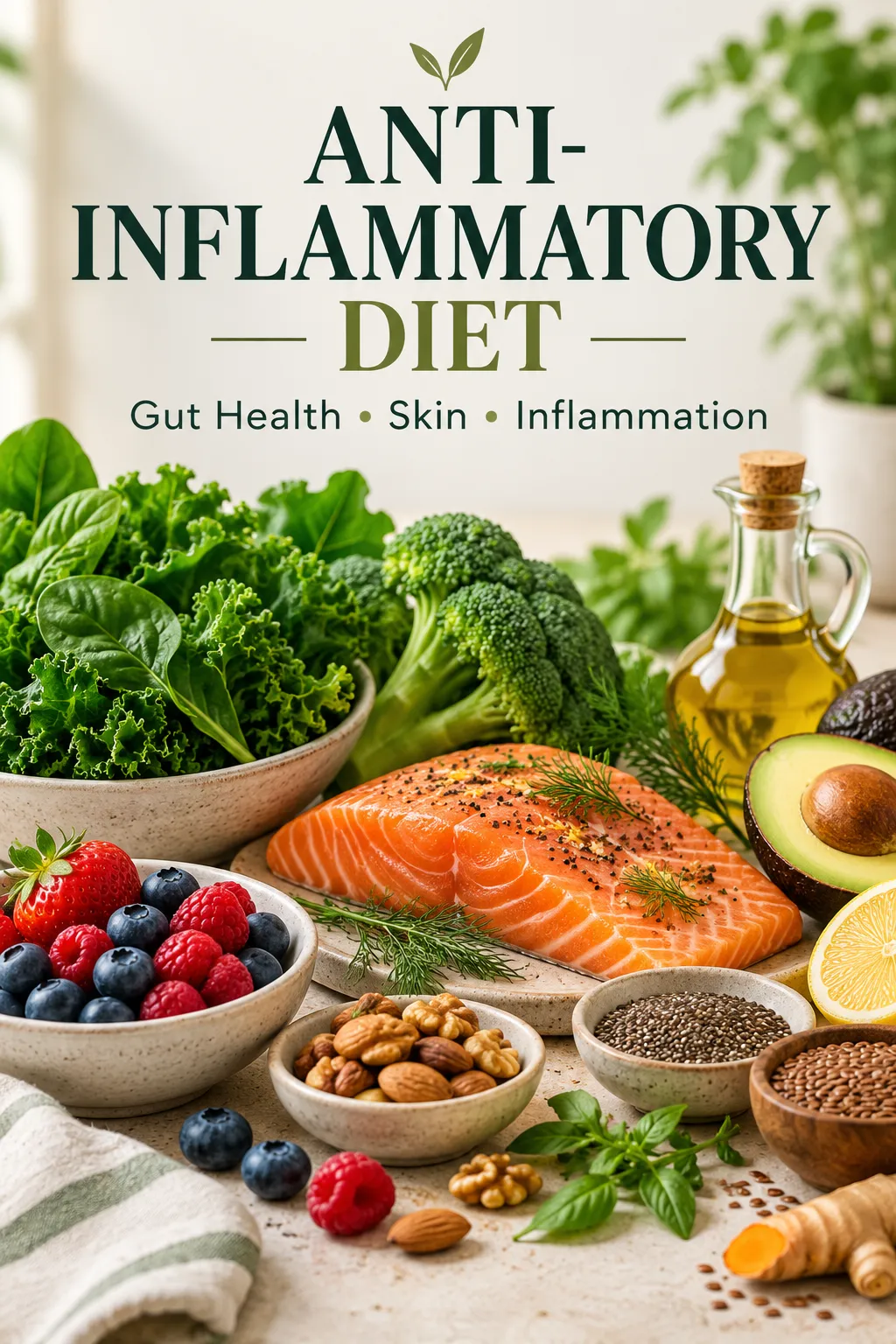
How to Eat an Anti-Inflammatory Diet for Gut Health, Skin, and Whole-Body Inflammation
A Practical Guide to an Anti-Inflammatory Gut Reset
You may have heard that you need to “detox,” “cleanse your gut,” or eliminate dozens of foods to reduce inflammation.
I want to make this simpler.
Your body already has sophisticated systems for processing and eliminating metabolic waste through your liver, kidneys, gastrointestinal tract, lungs, skin, and lymphatic system.
An anti-inflammatory nutrition plan is not about magically pulling toxins out of your body.
It is about reducing dietary stressors while giving your body the protein, fiber, phytonutrients, healthy fats, micronutrients, and hydration it needs to do its normal work well.
When I use an anti-inflammatory or gut-reset approach clinically, my goal is not to keep someone on a highly restrictive diet forever.
The goals are to:
reduce unnecessary inflammatory dietary exposures
increase nutrient density
support regular bowel function
support the gut microbiome
identify foods that may actually be triggering symptoms
stabilize blood sugar and energy
provide adequate protein for repair
improve the quality of dietary fats
create a foundation that can eventually become a sustainable way of eating
This can be particularly useful when someone is working through digestive symptoms, food sensitivities, inflammatory skin concerns, metabolic dysfunction, or a broader gut-healing program.
And one point matters from the beginning:
Anti-inflammatory eating is not about perfection. It is about changing the pattern.
Quick Answer: What Is an Anti-Inflammatory Diet?
An anti-inflammatory eating pattern emphasizes:
vegetables + fruit + adequate protein + healthy fats + fiber + herbs and spices + minimally processed foods
while reducing foods such as:
highly processed foods
excessive added sugar
sugar-sweetened beverages
processed meats
trans fats
excessive refined carbohydrates
excessive alcohol
Current research most consistently supports Mediterranean-style and plant-rich dietary patterns rather than one proprietary “anti-inflammatory diet.” A 2026 meta-analysis of 33 randomized controlled trials involving 3,476 adults found that Mediterranean dietary interventions significantly reduced several inflammatory biomarkers, including hs-CRP, IL-6 and IL-17, although not every inflammatory marker improved.
That distinction is important.
There is no single food that switches inflammation on or off.
The dietary pattern matters.
What Does “Inflammation” Actually Mean?
Inflammation itself is not bad.
If you cut your finger, develop an infection, or injure a muscle, your immune system creates an inflammatory response to help protect and repair you.
That is acute inflammation.
The concern is persistent, low-grade inflammation that may accompany conditions such as:
insulin resistance
metabolic disease
cardiovascular disease
obesity
some autoimmune and inflammatory disorders
Food is only one influence.
Sleep, stress, smoking, physical activity, infections, body composition, medications, environmental exposures and underlying disease also matter.
So when we talk about an “anti-inflammatory diet,” we are not claiming that broccoli treats every inflammatory disease.
We are building a nutritional environment that is generally more supportive of metabolic and immune health.
Why I Often Start With the Gut
The gastrointestinal tract does much more than digest food.
It helps:
digest and absorb nutrients
interact with the immune system
maintain the intestinal barrier
house trillions of microorganisms
produce microbial metabolites that can influence human physiology
The gut microbiome is especially responsive to diet.
A 2026 systematic review of 80 controlled clinical trials found that Mediterranean, high-fiber, high-polyphenol and plant-based dietary patterns were associated with favorable changes in certain short-chain-fatty-acid-producing bacteria and, in some studies, reductions in inflammatory markers. The researchers also emphasized that responses differ substantially between people and studies.
A separate systematic review of 37 studies found that Mediterranean-diet adherence was frequently associated with beneficial changes in microbiome composition and reported improvements in outcomes including bowel function, bloating and inflammation in some populations.
This is why I do not think of gut healing as:
“Kill everything, cleanse everything and start over.”
I think of it as:
remove unnecessary irritants + nourish the intestinal environment + restore dietary diversity + identify individual triggers.
For a deeper discussion, read:
Heal Your Gut, Boost Your Hormones, and Regain Energy Through Food Diversity
and:
Unlocking the Secrets of the Microbiome: How Gut Health Transforms Your Well-being
What Should I Eat on an Anti-Inflammatory Diet?
Instead of beginning with a giant list of foods you cannot eat, I prefer to begin with what we are trying to add.
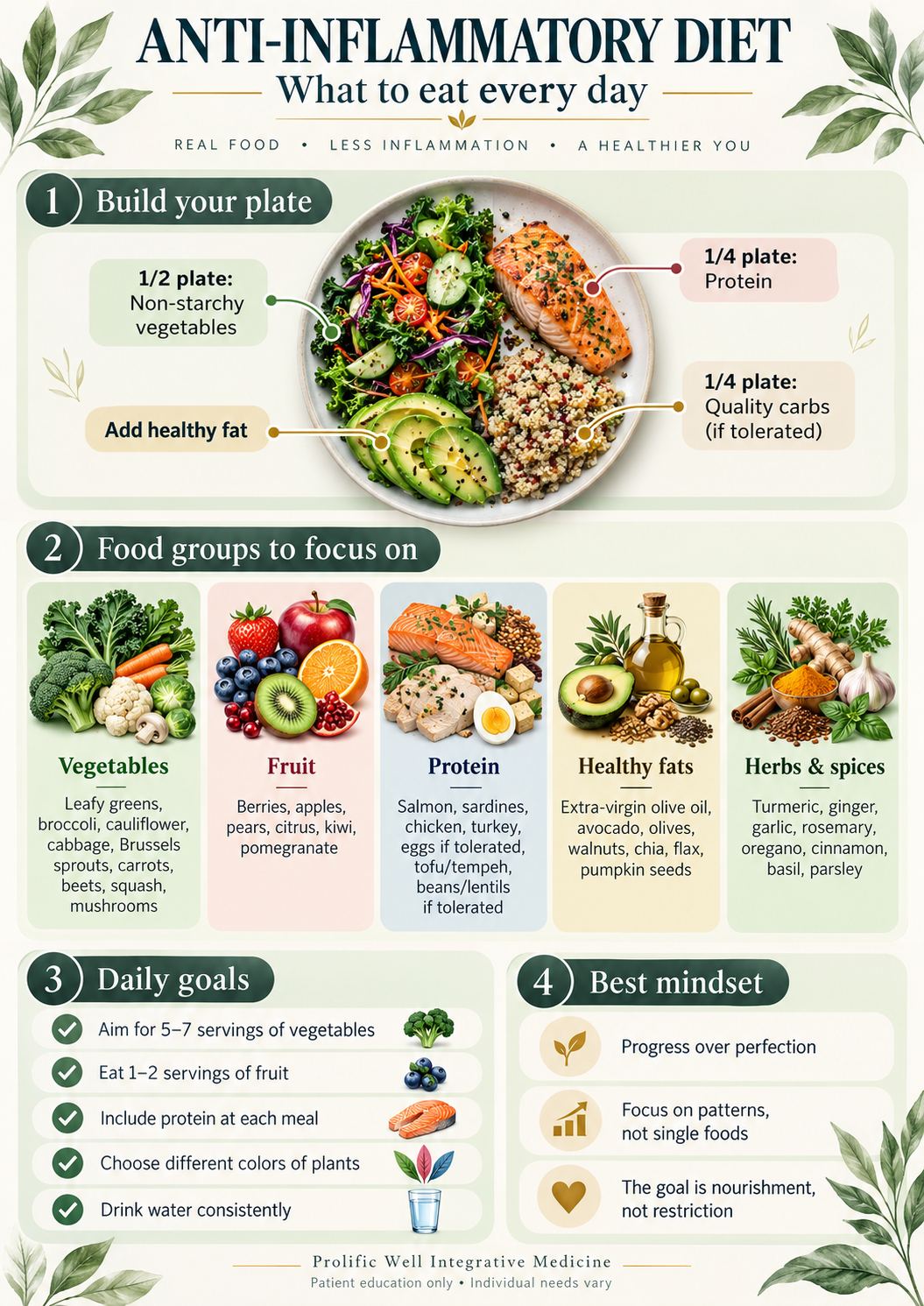
1. Make Vegetables the Foundation
This is one of the most useful principles from an anti-inflammatory gut-reset plan.
Aim for substantial vegetable diversity.
A practical goal for many people is approximately:
5–7 servings of vegetables per day
with needs individualized for the person.
Think beyond lettuce.
Include:
broccoli
cauliflower
Brussels sprouts
cabbage
kale
spinach
arugula
Swiss chard
asparagus
carrots
beets
squash
cucumber
mushrooms
onions
leeks
fennel
green beans
artichokes
radishes
turnips
sweet potatoes
And think about color.
Instead of eating the same vegetable every day, rotate:
dark green
red
orange
yellow
purple
white
Different plants provide different fibers and phytochemicals.
That diversity can also help feed a more diverse intestinal ecosystem.
Raw or Cooked Vegetables?
Both.
Raw vegetables preserve texture and provide one form of dietary fiber.
Cooked vegetables can be:
easier to digest
easier to chew
easier to consume in larger quantities
During an active digestive flare, some patients actually tolerate cooked vegetables much better than enormous raw salads.
So I do not require everyone to eat half their vegetables raw.
Your gut gets a vote.
If raw kale leaves you painfully bloated, forcing more raw kale is not “healing.”
We adjust.
What About Fruit?
Fruit can absolutely fit into an anti-inflammatory dietary pattern.
Good choices include:
blueberries
raspberries
strawberries
cherries
apples
pears
citrus
kiwi
pomegranate
plums
peaches
Berries are particularly useful because they provide:
fiber
polyphenols
vitamins
relatively modest carbohydrate loads per serving
For someone working on insulin resistance or blood sugar dysregulation, I may pay more attention to portions and pairing.
For example:
Instead of:
banana by itself
try:
berries + chia + Greek yogurt, if dairy is tolerated
or:
apple + nuts or seeds
For more on this, read:
and:
How to Eat Carbs Without Spiking Your Blood Sugar
Protein Is Essential During a Gut-Reset Program
This is something I do not want patients overlooking.
You cannot build a repair-oriented diet out of vegetables alone.
Protein supplies amino acids needed throughout the body.
Good choices can include:
salmon
sardines
trout
poultry
eggs, if tolerated
lean meats
tofu or tempeh, if tolerated
beans and lentils, if tolerated
Greek yogurt or cottage cheese, if tolerated
The exact protein sources depend on whether we are doing a temporary therapeutic elimination.
For most people, I want a meaningful source of protein at each main meal.
A simple question is:
Where is my protein?
For more guidance:
How Much Protein Do You Really Need?
and:
Why Protein Matters More After 40
Fatty Fish Is Particularly Useful
Foods such as:
salmon
sardines
trout
herring
mackerel
provide EPA and DHA omega-3 fatty acids.
I especially like fish as part of an anti-inflammatory eating pattern because it provides:
protein + omega-3 fat
in the same food.
That is very different from simply taking an enormous dose of fish-oil supplements because you heard omega-3s are “anti-inflammatory.”
Food first when appropriate.
What Fats Should I Use?
Focus primarily on unsaturated fats.
Good everyday choices include:
extra-virgin olive oil
avocado
olives
nuts
seeds
chia
flax
walnuts
tahini
fatty fish
Olive oil is particularly well studied as part of Mediterranean-style eating patterns.
A recent meta-analysis of clinical trials found Mediterranean diets supplemented with olive oil improved several inflammatory and endothelial markers compared with low-fat control diets.
Read:
What Fats Should I Actually Eat?
Use Herbs and Spices Generously
This is one of my favorite ways to increase plant diversity without making meals complicated.
Use:
turmeric
ginger
garlic
rosemary
oregano
thyme
basil
parsley
cilantro
cinnamon
cumin
dill
mint
sage
These foods contain many different phytochemicals.
But I want to make one distinction:
Herbs support a nutrient-dense diet. They are not chelation treatments or detox medications.
For example, I am happy to use cilantro in food.
I would not tell a patient that eating cilantro reliably “pulls heavy metals out of the body.”
Those are different claims.
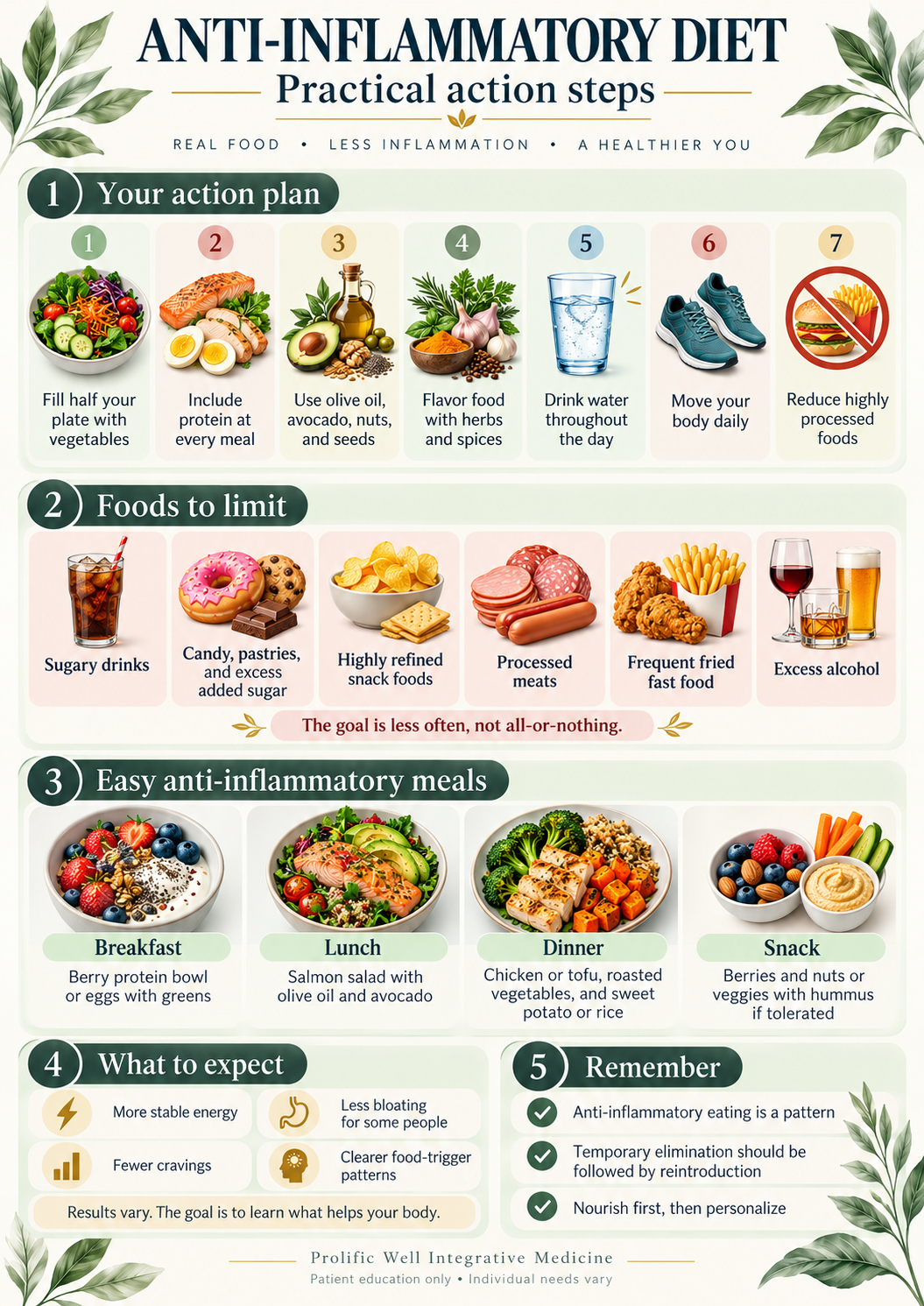
What Foods Should I Reduce During an Anti-Inflammatory Reset?
I would focus first on the highest-value targets.
Added Sugar
Examples:
candy
pastries
sweetened cereal
soda
sweet tea
energy drinks
heavily sweetened coffee drinks
You do not need zero grams of sugar forever.
But reducing frequent concentrated added sugar is a reasonable part of improving overall dietary quality.
Highly Refined Carbohydrates
Examples:
pastries
crackers
highly refined breads
many packaged snack foods
This does not mean carbohydrates are inflammatory by definition.
A sweet potato and a doughnut are both carbohydrate-containing foods.
They are not metabolically equivalent.
Read:
Ultra-Processed Foods
This is one area where I want patients to zoom out.
Instead of worrying about one ingredient in isolation, ask:
How much of my diet comes from foods that barely resemble the ingredients they started with?
Examples may include:
packaged sweets
chips
fast food
processed snack foods
many ready-to-eat desserts
processed meats
sugar-sweetened beverages
An umbrella review of systematic reviews found higher ultra-processed-food intake associated with several adverse health outcomes, including cardiovascular disease, type 2 diabetes and all-cause mortality, although much of this evidence is observational and cannot prove that every individual ultra-processed food causes disease.
My goal is not fear.
It is displacement:
more real food, fewer foods engineered to be the entire diet.
What About Processed Meat?
Try to reduce foods such as:
bacon
sausage
hot dogs
heavily processed deli meats
That does not mean one piece of bacon creates systemic inflammation.
Think in patterns.
If processed meat is your breakfast, lunch and snack every day, that is a very different dietary pattern than eating it occasionally.
Do I Need to Remove Gluten?
Not automatically.
This is where I would individualize the original “cleanse” concept.
Gluten elimination is clearly appropriate for someone with celiac disease.
It may also be appropriate during a medically supervised evaluation for certain suspected gluten-related symptoms.
But I do not tell every person that gluten is inherently inflammatory.
If we temporarily remove gluten during an elimination phase, the goal should be:
observe → stabilize → reintroduce → learn
not:
remove forever without knowing why.
Do I Need to Remove Dairy?
Again, not automatically.
Some patients feel better without dairy.
Others tolerate:
Greek yogurt
kefir
cottage cheese
cheese
very well.
If dairy is a suspected trigger for:
digestive symptoms
skin symptoms
congestion
other reproducible complaints
a temporary elimination followed by reintroduction may provide useful information.
But an anti-inflammatory diet does not universally require lifelong dairy avoidance.
What About Eggs?
Eggs are not universally inflammatory.
They are a useful source of:
high-quality protein
choline
B vitamins
other nutrients
I would remove eggs temporarily only if there is a reason to evaluate them as an individual trigger.
What About Soy?
The same principle applies.
Foods such as:
tofu
tempeh
edamame
can be nutrient-dense protein sources.
There is no need to remove all soy from every anti-inflammatory diet unless there is an individual indication.
Do I Need to Avoid Nightshades?
Nightshades include:
tomatoes
eggplant
peppers
white potatoes
The internet frequently labels these foods as inflammatory.
For the general population, I do not routinely remove them.
If someone has a reproducible symptom pattern and we want to test them systematically, we can.
But otherwise, tomatoes and peppers provide valuable nutrients and phytochemicals.
An elimination diet should help us learn something about the patient, not simply produce the longest possible prohibited-food list.
What About Grains?
Whole grains can fit into an anti-inflammatory eating pattern for many people.
Examples include:
oats
quinoa
brown rice
other intact whole grains
During a temporary gut-reset period, I may modify grains depending on:
digestive symptoms
blood sugar
suspected intolerances
intestinal conditions
the goals of the intervention
But the long-term goal is generally the broadest nutritious diet a person can comfortably tolerate, not permanent unnecessary restriction.
For rice specifically, read:
Does Cooling Rice Change How Your Body Digests It?
and:
What Should an Anti-Inflammatory Plate Look Like?
This does not need to be complicated.
Start here:
Half the plate
Vegetables.
Preferably several colors.
About one-quarter
Protein.
For example:
salmon
chicken
tofu
lentils
About one-quarter
A quality carbohydrate if tolerated.
Examples:
sweet potato
rice
quinoa
beans
lentils
Add
Healthy fat.
For example:
olive oil
avocado
seeds
This looks remarkably similar to the plate I recommend for metabolic health because these systems overlap.
Read:
What Does a Blood-Sugar-Friendly Meal Look Like?
What Does a Day of Anti-Inflammatory Eating Look Like?
Here is one practical example.
Breakfast
Eggs or tofu
Spinach and mushrooms
Avocado
Berries
Or:
Protein smoothie with berries, greens, chia or flax, and an appropriate protein source.
Lunch
Large mixed greens salad
Salmon or chicken
Cucumber
Carrots
Beets
Avocado
Olive-oil and lemon dressing
Snack, if hungry
Berries + nuts
or:
Vegetables + hummus, if legumes are tolerated
Dinner
Wild salmon or another protein
Roasted broccoli and cauliflower
Sweet potato or rice
Olive oil
Fresh herbs
Simple.
Colorful.
Repeatable.
A Simple Anti-Inflammatory Smoothie
You do not need a proprietary “detox shake.”
Try:
unsweetened milk or fortified plant milk
berries
handful of spinach
protein source
chia or ground flax
cinnamon
optional avocado for texture
If using a plant milk, check the protein content.
A smoothie containing only fruit and juice is mostly a carbohydrate beverage.
For more on constructing breakfast:
What Should I Eat for Breakfast?
Anti-Inflammatory Foods for Skin Health
Skin is influenced by much more than food.
Potential contributors to acne, eczema and other inflammatory skin symptoms can include:
hormones
genetics
topical products
immune function
medications
stress
environmental exposures
metabolic health
the gut-skin axis
So I do not promise that an anti-inflammatory diet will “clear your skin.”
But nutrition can be part of the picture.
A 2025 systematic review and meta-analysis found that greater adherence to a Mediterranean diet correlated with lower acne severity, but it did not significantly reduce the odds of developing acne, and the overall evidence quality was low.
That is exactly the kind of nuance I want patients to understand.
Nutrition can support skin health.
It is not a substitute for diagnosing the reason your skin is inflamed.
Foods I Emphasize for Skin
I generally emphasize:
colorful vegetables
berries
omega-3-rich fish
extra-virgin olive oil
avocado
nuts and seeds
adequate protein
adequate hydration
And reduce excessive:
added sugar
highly refined foods
ultra-processed foods
If a particular food appears to correlate repeatedly with your skin symptoms, that is when a structured elimination and reintroduction becomes useful.
What Is a Gut “Cleanse,” Really?
I want to clarify this because the word cleanse gets misused.
Your intestines do not need to be scrubbed clean.
And you should not be trying to “flush” your colon repeatedly.
When I refer to a gut reset or cleansing phase, I mean creating a controlled period where we:
simplify the diet,
remove suspected triggers,
reduce highly processed foods,
emphasize nutrient-dense whole foods,
support regular bowel movements,
observe symptoms,
and eventually reintroduce foods strategically.
That gives us information.
A restrictive diet with no reintroduction plan does not.
Why Regular Bowel Movements Matter
Constipation matters during any gut-healing plan.
Your gastrointestinal tract is one route through which your body eliminates waste.
Support bowel regularity with:
adequate fluid
appropriate fiber
movement
adequate food intake
But suddenly doubling fiber in someone with severe constipation or bloating can make them feel worse.
Increase gradually when needed.
If constipation is persistent, evaluate the reason.
Possible contributors include:
low fiber
low fluid
medications
thyroid dysfunction
pelvic-floor dysfunction
low food intake
gastrointestinal disorders
How Much Water Should I Drink?
There is no universal anti-inflammatory water prescription.
Your hydration requirements depend on:
body size
activity
sweat
climate
pregnancy
breastfeeding
medications
kidney and cardiovascular health
Instead of forcing everyone to drink 100 ounces, I individualize hydration.
Read:
How Much Water Do I Really Need?
Plain water is excellent.
You do not need alkaline water to “de-acidify” your body.
Your lungs and kidneys tightly regulate acid-base balance.
Do I Need Electrolytes?
Not automatically.
Electrolytes can be useful when someone is losing significant fluid through:
heavy sweating
prolonged exercise
vomiting
diarrhea
heat exposure
But adding electrolyte powder or large amounts of salt to every bottle of water is not necessary for everyone.
Again:
Individualize.
Movement Is Part of an Anti-Inflammatory Lifestyle
Food matters.
So does movement.
A practical goal is to accumulate regular movement through:
walking
resistance training
yoga or mobility work
cardiovascular exercise
daily activity
You do not have to punish yourself with intense exercise during a gut-reset program.
Especially if you are already fatigued.
Movement should support recovery, not become another physiologic stressor.
Even a short walk after meals can be useful for metabolic health.
Sleep Is Part of This Too
You cannot out-supplement chronic sleep deprivation.
Poor sleep can affect:
appetite
insulin sensitivity
stress hormones
food choices
energy
immune regulation
If you are trying to reduce inflammation but consistently sleep five hours, sleep belongs in the treatment plan.
What Should You Expect During the First Week?
People respond differently.
You may notice:
different bowel movements
altered hunger
changes in cravings
improved awareness of food triggers
changes in bloating
changes in energy
Some people feel better quickly.
Others do not.
I am cautious about calling headaches, severe fatigue, diarrhea or significant illness a “detox reaction.”
Those symptoms can also represent:
inadequate calorie intake
dehydration
caffeine withdrawal
medication effects
hypoglycemia
infection
another medical issue
Do not assume that feeling terrible means your cleanse is “working.”
That is not a reliable medical principle.
What Should You Expect After Two to Four Weeks?
If the dietary pattern is helping, possible improvements may include:
easier meal planning
more predictable hunger
improved bowel regularity
reduced bloating in some people
steadier energy
fewer cravings
improvement in certain individual trigger-related symptoms
But there is no guarantee.
Inflammation is not something most people can “feel leaving their body.”
And if symptoms are not improving, that gives us useful information too.
We look deeper.
Why Reintroduction Is So Important
This is the part many cleanse programs forget.
If we temporarily remove:
dairy
gluten
eggs
soy
particular grains
certain other suspected foods
we eventually want to find out whether those foods actually matter.
Otherwise you may end up unnecessarily restricting your diet for years.
A structured reintroduction typically means:
one food category at a time
while observing symptoms.
Depending on the clinical situation, we may watch for changes in:
bloating
stool
abdominal pain
reflux
skin
headache
energy
joint symptoms
Then we make decisions based on patterns.
The goal is not the most restrictive diet.
The goal is the most varied, nutrient-dense diet your body tolerates well.
What If You Feel Worse When Adding Food Back?
That is information.
But one reaction is not always proof of a permanent intolerance.
Symptoms can also be affected by:
dose
preparation
combination with other foods
menstrual cycle
stress
illness
sleep
timing
That is why careful reintroduction is more useful than randomly eating five eliminated foods in one restaurant meal and trying to guess what happened.
What About Supplements During a Gut Cleanse?
Food comes first.
Supplements may have a role when there is a clear reason.
But taking:
detox powders
binders
antimicrobials
herbs
probiotics
enzymes
all at once makes it difficult to know what is helping and what is causing symptoms.
I prefer interventions with a purpose.
Ask:
What are we treating?
Why am I taking this?
How long am I taking it?
How will we know whether it worked?
That is a much better approach than creating an enormous supplement stack.
Seven Anti-Inflammatory Foods to Start Eating More Often
If you want the simplest possible starting point:
1. Leafy greens
Spinach, kale, arugula, collards.
2. Cruciferous vegetables
Broccoli, cauliflower, cabbage, Brussels sprouts.
3. Berries
Blueberries, raspberries, strawberries.
4. Fatty fish
Salmon, sardines, trout.
5. Extra-virgin olive oil
Use it regularly as one of your primary fats.
6. Nuts and seeds
Walnuts, chia, flax, pumpkin seeds.
7. Herbs and spices
Garlic, ginger, turmeric, rosemary, oregano and others.
You do not need an exotic superfood.
The basics are powerful.
Seven Foods or Categories to Reduce First
You also do not need a 50-item “never eat” list.
Start with the highest-value changes:
1. Sugar-sweetened beverages
2. Excess added sugar
3. Highly refined packaged snacks
4. Processed meats
5. Frequent fried fast foods
6. Excess alcohol
7. A dietary pattern dominated by ultra-processed foods
That is a much more sustainable starting point than immediately removing every grain, bean, egg, tomato and piece of fruit.
My Anti-Inflammatory Grocery List
Vegetables
Broccoli
Cauliflower
Cabbage
Brussels sprouts
Kale
Spinach
Arugula
Carrots
Beets
Squash
Sweet potato
Asparagus
Cucumber
Mushrooms
Onions
Garlic
Fruit
Blueberries
Raspberries
Strawberries
Cherries
Apples
Pears
Citrus
Kiwi
Pomegranate
Protein
Salmon
Sardines
Trout
Chicken
Turkey
Eggs if tolerated
Tofu or tempeh if tolerated
Beans and lentils if tolerated
Healthy fats
Extra-virgin olive oil
Avocado
Olives
Walnuts
Chia
Flax
Pumpkin seeds
Herbs and spices
Turmeric
Ginger
Garlic
Cinnamon
Rosemary
Oregano
Basil
Parsley
Cilantro
Cumin
Thyme
Three Easy Anti-Inflammatory Meals
Breakfast: Berry Protein Bowl
Greek yogurt or another protein base if tolerated
Blueberries
Raspberries
Chia
Walnuts
Cinnamon
For more breakfast ideas:
What Should I Eat for Breakfast?
Lunch: Salmon Power Salad
Mixed greens
Salmon
Cucumber
Carrots
Beets
Avocado
Pumpkin seeds
Extra-virgin olive oil
Lemon
This gives you:
protein + omega-3 fats + vegetables + fiber + phytonutrients.
Dinner: Turmeric Chicken and Vegetables
Chicken
Broccoli
Cauliflower
Sweet potato
Olive oil
Turmeric
Garlic
Ginger
You do not need complicated recipes for an anti-inflammatory diet to work.
Why You May Be Hungry During a Cleanse
This happens frequently when people remove foods but forget to replace the nutrition those foods were providing.
If your “cleanse meal” is:
lettuce + cucumber + lemon juice
you may be hungry an hour later.
That is not lack of willpower.
You did not eat much.
Make sure meals include:
protein + vegetables + healthy fat + appropriate carbohydrate
For more on staying satisfied, read:
Why Am I Hungry Again Two Hours After Eating?
What About Blood Sugar During an Anti-Inflammatory Program?
Do not become so focused on “detoxification” that you ignore glucose regulation.
Someone eating:
fruit smoothie
dates
fruit snack
another smoothie
large serving of dried fruit
may technically be eating “clean foods” while still consuming a large carbohydrate load.
Whole-food quality matters.
So does metabolic context.
Read:
How to Eat Carbs Without Spiking Your Blood Sugar
and:
What Does a Blood-Sugar-Friendly Meal Look Like?
Who Should Be More Careful With a Restrictive Cleanse?
A restrictive elimination program is not appropriate for everyone.
Extra caution is warranted for people who are:
pregnant
breastfeeding
underweight
dealing with an eating disorder or history of restrictive eating
taking insulin or glucose-lowering medication
living with significant kidney disease
medically frail
managing complex gastrointestinal disease
experiencing unexplained weight loss
Those situations require individualized guidance.
When Should You Seek Medical Evaluation?
Do not assume every digestive or skin symptom is “inflammation.”
Seek evaluation for symptoms such as:
blood in the stool
black stool
persistent vomiting
unexplained weight loss
severe abdominal pain
persistent diarrhea
recurrent fever
difficulty swallowing
anemia
significant nutrient deficiencies
severe or rapidly changing skin disease
Those deserve diagnosis, not simply another cleanse.
Frequently Asked Questions
What is the best anti-inflammatory diet?
There is no single official anti-inflammatory diet, but Mediterranean-style dietary patterns have some of the strongest evidence for lowering several inflammatory biomarkers. They emphasize vegetables, fruits, legumes, whole grains, nuts, seeds, olive oil and fish while minimizing highly processed foods.
How long does an anti-inflammatory diet take to work?
There is no universal timeline. Some digestive symptoms may change within days or weeks, while measurable metabolic or inflammatory changes can take longer. Response depends heavily on the underlying cause.
Can an anti-inflammatory diet heal the gut?
Diet can support intestinal and microbiome health, but “heal the gut” is too broad to promise universally. Mediterranean and high-fiber dietary interventions can influence microbiome composition and microbial metabolites, but different gastrointestinal conditions require different treatment.
Can an anti-inflammatory diet improve skin?
It may help some people depending on what is driving the skin condition. Evidence linking Mediterranean-style eating with acne is promising but currently limited and does not prove that diet alone treats acne.
Should I avoid gluten?
Only when there is a medical reason or when we are intentionally testing it as a possible trigger. Gluten avoidance is essential in celiac disease but is not required for everyone.
Should I avoid dairy?
Not universally. A temporary elimination may be useful when dairy is a suspected trigger, followed by structured reintroduction.
Are eggs inflammatory?
Not inherently for most people. They can be included unless there is an individual reason to avoid them.
Are nightshades inflammatory?
There is not strong evidence that everyone needs to eliminate tomatoes, peppers, eggplant and potatoes. Test them only when clinically appropriate.
Do I need detox supplements?
Not automatically. Food quality, adequate protein, fiber, hydration, bowel regularity, sleep and movement generally come first.
Do I need alkaline water?
No. Your body regulates blood pH tightly through the lungs and kidneys.
Can I drink coffee?
For many people, moderate coffee consumption can fit into a healthy diet. Whether I temporarily remove it depends on symptoms such as reflux, anxiety, sleep disturbance or gastrointestinal irritation.
The Bottom Line
An anti-inflammatory program should not make you afraid of food.
And a gut cleanse should not leave you weak, hungry and living on green juice.
A better approach is:
eat more vegetables
eat different colors
get enough protein
choose better fats
include fiber
use herbs and spices
drink appropriately
move your body
sleep
reduce highly processed foods
identify your actual triggers
reintroduce foods when appropriate
Most importantly:
Do not confuse restriction with healing.
The purpose of an elimination phase is to learn.
The purpose of gut support is to build resilience.
And the long-term goal is not to survive on five “safe foods.”
It is to create the broadest, most nourishing eating pattern your body tolerates well.
Read Next: Build Your Anti-Inflammatory Foundation
Start here:
The Prolific Well Guide to Eating for Energy, Metabolism, Hormones, and Longevity
Then continue with:
How Much Protein Do You Really Need?
Why Protein Matters More After 40
How to Eat Carbs Without Spiking Your Blood Sugar
Does Cooling Rice Change How Your Body Digests It?
What Does a Blood-Sugar-Friendly Meal Look Like?
What Fats Should I Actually Eat?
How Much Water Do I Really Need?
What Should I Eat for Breakfast?
Why Am I Hungry Again Two Hours After Eating?
And for the gut specifically:
Heal Your Gut, Boost Your Hormones, and Regain Energy Through Food Diversity
Unlocking the Secrets of the Microbiome: How Gut Health Transforms Your Well-being
A More Personalized Approach
If you are dealing with:
chronic bloating
constipation or diarrhea
reflux
suspected food sensitivities
acne or inflammatory skin symptoms
fatigue
insulin resistance
autoimmune or inflammatory symptoms
difficulty tolerating many foods
I do not want to simply hand you a longer list of foods to avoid.
At Prolific Well Integrative Medicine, I look at the broader picture:
diet quality
gastrointestinal symptoms
bowel function
food triggers
blood sugar
protein and nutrient intake
microbiome factors when clinically relevant
thyroid and hormone health
medications
sleep
stress
movement
underlying medical conditions
Sometimes an elimination phase is useful.
Sometimes the bigger problem is inadequate nutrition.
Sometimes we need to investigate before we restrict.
The goal is not to eat less and less.
The goal is to understand your physiology well enough to build a diet that supports your gut, skin, metabolism and long-term health.
Dr. Evelyn Le Ellis, ND, MPH, FAIHM
Prolific Well Integrative Medicine
This article is for educational purposes and does not replace individualized medical evaluation or treatment. Restrictive diets, supplements and elimination protocols should be individualized when medical conditions, medications, pregnancy, breastfeeding, eating-disorder history or significant gastrointestinal symptoms are present.
References
Keshani M, et al. Mediterranean Diet Reduces Inflammation in Adults: A Systematic Review and Meta-analysis of Randomized Controlled Trials.Nutrition Reviews. 2026;84(9):1776–1790. The analysis included 33 randomized controlled trials and found significant reductions in hs-CRP, IL-6 and IL-17, although not all inflammatory biomarkers improved.
View on PubMedDietary Patterns Associated With Anti-inflammatory Effects: An Umbrella Review of Systematic Reviews and Meta-analyses. 2025. The umbrella review found the strongest overall evidence among evaluated dietary patterns for Mediterranean-style eating, particularly for CRP, IL-6 and adiponectin, although certainty varied by outcome.
View on PubMedEffect of anti-inflammatory diets on inflammation markers in adult human populations: a systematic review of randomized controlled trials. 2022. Twenty randomized controlled trials were reviewed, with Mediterranean dietary interventions showing improvements in several inflammatory biomarkers compared with control diets.
View on PubMedKhavandegar A, Heidarzadeh A, Angoorani P, et al. Adherence to the Mediterranean diet can beneficially affect the gut microbiota composition: a systematic review.BMC Medical Genomics. 2024;17:91. Thirty-seven studies were reviewed, with many reporting beneficial microbiome changes and clinical outcomes including improved bowel movements, decreased bloating and reduced inflammation.
View on PubMedDietary interventions and the gut microbiota: a systematic literature review of 80 controlled clinical trials. 2026. Mediterranean, high-fiber, high-polyphenol and plant-based dietary interventions were associated with changes in specific beneficial microbial groups and metabolites, although results varied considerably among studies.
View on PubMedEffects of a Mediterranean diet on the gut microbiota and microbial metabolites: A systematic review of randomized controlled trials and observational studies. This systematic review included 17 randomized trials and 17 observational studies examining Mediterranean dietary patterns, gut microbiota composition and microbial metabolites.
View on PubMedThe Mediterranean diet and acne vulgaris: a systematic review and meta-analysis. 2025. Greater Mediterranean-diet adherence was correlated with lower acne severity, but was not significantly associated with lower odds of acne development. Evidence quality was low and additional controlled research is needed.
View on PubMedBarbaresko J, et al. Ultra-processed food consumption and human health: an umbrella review of systematic reviews with meta-analyses.Critical Reviews in Food Science and Nutrition. 2025;65(11):1999–2007. Higher ultra-processed-food consumption was associated with several adverse health outcomes, including cardiovascular disease and type 2 diabetes, although much of the underlying evidence is observational.
View on PubMedEffect of the Mediterranean Diet Supplemented With Olive Oil Versus the Low-Fat Diet on Serum Inflammatory and Endothelial Indexes Among Adults: A Systematic Review and Meta-analysis of Clinical Controlled Trials. 2024. Mediterranean dietary patterns supplemented with olive oil improved several inflammatory and endothelial-function markers compared with low-fat dietary controls.
View on PubMed


