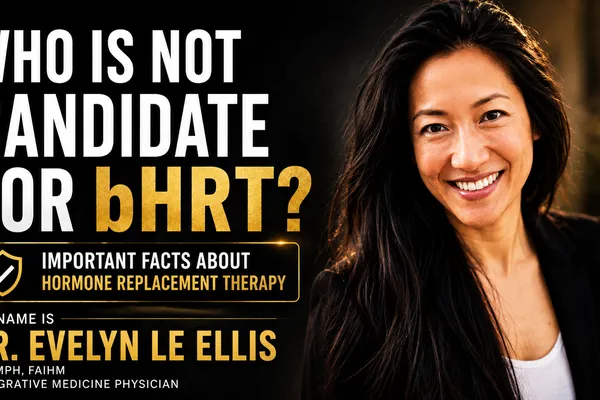
Who Should Not Take BHRT? Bioidentical Hormone Therapy Risks, Contraindications & Safety Explained
Bioidentical hormone replacement therapy (BHRT) is not appropriate for everyone. Whether hormone therapy is appropriate depends on the specific hormone being considered, your symptoms, age, reproductive goals, personal and family medical history, cancer history, cardiovascular and clotting risk, and the formulation and route of hormone therapy.
If you are considering bioidentical hormone replacement therapy for perimenopause, menopause, low testosterone, hot flashes, night sweats, low libido, fatigue, brain fog, sleep problems, or other symptoms of hormone imbalance, the most important question is not simply:
“Can I take hormones?”
A better question is:
“What are the potential benefits, risks, alternatives, and safest treatment options for me?”
That is where individualized hormone care becomes important.
What Is Bioidentical Hormone Replacement Therapy?
Bioidentical hormones are hormones with the same chemical and molecular structure as hormones naturally produced by the human body.
Depending on the patient's needs, hormone therapy may involve estradiol, progesterone, or testosterone and may be delivered through patches, gels, creams, oral medications, injections, or pellets.
It is also important to distinguish between FDA-approved bioidentical hormone products and compounded bioidentical hormone therapy, because “bioidentical” does not automatically mean safer or more effective.
If you're just beginning to explore hormone therapy, read my guide on bioidentical hormone pellet therapy and hormone imbalance, where I explain another approach to individualized hormone treatment.
Who Should Not Take BHRT?
There isn't one universal answer because estrogen, progesterone, and testosterone have different indications, precautions, and contraindications.
A person's medical history needs to be evaluated before treatment.
Several situations deserve particular attention.
1. Pregnancy
Systemic menopausal hormone therapy is not intended for use during pregnancy.
If pregnancy is possible, that should be discussed before beginning hormone therapy.
Hormones used for menopausal symptom management should also not be considered contraception.
2. Men Who Want to Preserve Fertility
This is particularly important with testosterone replacement therapy (TRT).
External testosterone can suppress signaling between the brain and testes, which may significantly reduce sperm production.
For a man who wants to have children now or in the future, fertility goals should therefore be discussed before starting testosterone therapy.
This doesn't necessarily mean that a man experiencing symptoms of low testosterone has no treatment options. It means that the treatment strategy may need to be different.
3. Personal History of Breast Cancer
A history of breast cancer requires much more careful evaluation, particularly when the tumor was hormone-receptor positive.
The answer should not be reduced to:
“Hormones are always safe.”
or:
“Hormones are never safe.”
Cancer type, receptor status, treatment history, recurrence risk, current symptoms, and the type and route of hormone being considered all matter.
For cancer survivors, decisions about systemic hormone therapy may require coordination with the patient's oncology team.
4. History of Endometrial or Other Hormone-Sensitive Cancers
A history of endometrial, ovarian, or other potentially hormone-sensitive cancers also deserves individualized assessment.
Not all cancers behave the same way, and not every hormone has the same biological effect.
This is why your personal cancer history is more clinically useful than simply asking whether “cancer runs in the family.”
5. Prostate Cancer History
Men with a history of prostate cancer require individualized assessment before considering testosterone therapy.
The clinical decision can depend on factors such as:
Cancer characteristics
Previous treatment
Current disease status
PSA history
Symptoms
Testosterone levels
Overall health
Specialist recommendations
This is another situation where hormone therapy should not be treated as a generic anti-aging intervention.
6. Blood Clot and Cardiovascular History
A history of venous thromboembolism, stroke, heart attack, cardiovascular disease, or certain clotting disorders may substantially affect the risk-benefit discussion around hormone therapy.
The route of estrogen administration also matters.
Oral estrogen and transdermal estrogen do not have identical effects on hepatic metabolism and coagulation pathways.
This is why simply asking whether someone is “on bioidentical hormones” doesn't tell us enough.
We need to know:
Which hormone? At what dose? Through which route? For what indication?
7. Unexplained Vaginal Bleeding
Unexplained postmenopausal or abnormal vaginal bleeding should be evaluated rather than automatically attributed to hormone imbalance.
Depending on the clinical situation, evaluation may involve a pelvic examination, imaging, endometrial assessment, or referral before hormone therapy is initiated or adjusted.
8. Liver and Other Significant Medical Conditions
Because hormones are metabolized and processed through multiple physiological pathways, significant liver disease and certain other medical conditions can change whether a particular hormone formulation is appropriate.
Again, this illustrates why BHRT safety cannot be determined from symptoms alone.
Does a Family History of Cancer Mean You Cannot Take BHRT?
Not necessarily.
A family history of breast, ovarian, uterine, or prostate cancer is important information, but family history alone does not automatically determine whether an individual can or cannot receive hormone therapy.
I look at the broader picture, including:
Personal cancer history
Family history
Age
Menopause status
Symptoms
Reproductive goals
Cardiovascular history
Blood clot history
Breast and gynecologic history
Current medications
Laboratory findings when clinically relevant
For some patients, genetic counseling or additional screening may also be appropriate.
The goal is personalized risk assessment, not fear-based decision-making.
Is BHRT Safer Because It Is “Bioidentical”?
This is an important misconception.
The word “bioidentical” does not mean risk-free.
A hormone can be structurally identical to a hormone your body produces and still have clinically important benefits, risks, contraindications, dosing considerations, and monitoring requirements.
Likewise, compounded bioidentical hormone preparations should not automatically be assumed to be safer than FDA-approved hormone therapies.
What matters is the specific hormone, formulation, dose, route, indication, medical history, and monitoring plan.
What About Hormone Pellets?
Hormone pellets are one method of delivering estradiol or testosterone, but they are not the only option.
Depending on the individual, hormone therapy may include:
Transdermal patches
Gels
Creams
Oral progesterone
Vaginal hormone therapies
Testosterone injections or topical therapy
Hormone pellets
I've written a detailed guide explaining bioidentical hormone pellet therapy, potential benefits, and how treatment is individualized.
The key point is that delivery method should follow the patient's clinical needs, rather than starting with a particular product and trying to make the patient fit it.
What Should Be Evaluated Before Starting BHRT?
A thoughtful hormone evaluation begins with more than a hormone panel.
Before recommending hormone replacement therapy, I consider the patient's symptoms, medical history, family history, medications, reproductive goals, previous treatments, lifestyle, and appropriate laboratory or preventive screening.
Symptoms such as fatigue, brain fog, weight changes, poor sleep, low libido, mood changes, and reduced motivation can involve hormones, but they can also overlap with thyroid dysfunction, metabolic health, nutritional deficiencies, chronic stress, gastrointestinal problems, and other conditions.
This is why I use a broader functional and integrative medicine framework.
You can learn more in my article, How Integrative & Functional Medicine Uncover the Root Cause of Hormone Imbalance and Chronic Fatigue.
Gut health can also interact with nutrition, inflammation, and overall metabolic health. For a deeper look at this relationship, explore Heal Your Gut, Boost Your Hormones, and Regain Energy Through Food Diversity and my guide to the gut microbiome and whole-body health.
What Symptoms May Lead Someone to Ask About Hormone Therapy?
People commonly begin investigating BHRT, menopause hormone therapy, or testosterone replacement therapy because they notice changes such as:
Hot flashes or night sweats
Sleep disruption
Vaginal dryness
Changes in sexual function or libido
Fatigue
Brain fog
Mood changes
Changes in body composition
Reduced muscle mass or strength
Low motivation
But symptoms don't automatically mean that hormone replacement is the correct treatment.
For example, persistent fatigue can involve hormones but may also relate to stress physiology, sleep, metabolic health, thyroid function, nutrition, or other factors. I discuss these connections further in Why You're Still Tired After Winter.
BHRT Safety: The Bottom Line
Bioidentical hormone replacement therapy is not a one-size-fits-all treatment, and being “bioidentical” does not make a hormone automatically safe for every person.
The decision should consider:
your symptoms + your medical history + your family history + fertility goals + potential contraindications + treatment options + benefits + risks + monitoring.
For some people, hormone therapy can be an appropriate part of a comprehensive treatment plan.
For others, the risks may outweigh the benefits, or another treatment strategy may be more appropriate.
That's why the question I want patients to ask isn't:
“Is BHRT good or bad?”
It's:
“Is this particular hormone, at this dose and through this delivery method, appropriate for me?”
Frequently Asked Questions About BHRT
Who should not take BHRT?
There is no single answer for every hormone product. Pregnancy, certain hormone-sensitive cancers, unexplained vaginal bleeding, cardiovascular or thromboembolic history, liver disease, fertility goals, and other medical factors can affect whether a specific hormone therapy is appropriate.
Can breast cancer survivors take bioidentical hormones?
A personal history of breast cancer, particularly hormone-receptor-positive breast cancer, requires individualized assessment. Systemic hormone therapy may not be appropriate for some survivors, and decisions should be made in coordination with the patient's oncology and healthcare team.
Can men take testosterone if they want children?
Men who want to preserve fertility should discuss this before starting testosterone replacement therapy because exogenous testosterone can suppress sperm production.
Does a family history of breast cancer automatically rule out BHRT?
No. Family history is one component of risk assessment and does not automatically determine eligibility. Personal history, age, symptoms, cancer risk, and the specific hormone therapy being considered all matter.
Are bioidentical hormones safer than conventional HRT?
“Bioidentical” describes molecular structure; it does not mean a treatment is inherently risk-free. Safety depends on the hormone, dose, route, indication, formulation, medical history, and monitoring.
Should everyone have hormone testing before BHRT?
Testing should be individualized. Laboratory testing can be useful in certain circumstances, but symptoms, age, menstrual or menopause status, medical history, medications, physical findings, and preventive screening are also important components of hormone evaluation.
Learn More About Hormone Health
If you're exploring hormone therapy, I recommend continuing with my article on bioidentical hormone pellet therapy and hormone optimization and my guide to functional medicine, hormone imbalance, and chronic fatigue.
You can also explore the broader Prolific Well health education library for articles on hormone health, menopause, gut health, thyroid health, brain health, metabolism, and longevity.
For video education, visit Dr. Evelyn Le Ellis on YouTube.
About Dr. Evelyn Le Ellis
Dr. Evelyn Le Ellis, ND, MPH, FAIHM, is a Washington-licensed naturopathic physician and founder of Prolific Well Integrative Medicine in Olympia, Washington. Her clinical focus includes functional and integrative medicine, hormone health, healthy aging, gut health, thyroid health, metabolic health, and personalized root-cause care for women and men.
This article is for educational purposes and does not provide individualized medical advice. Hormone therapy requires an individualized evaluation of potential benefits, risks, contraindications, alternatives, and monitoring.


