
Prepare Your Body for the Rest of the Year: How to Build Sustainable Energy, Metabolism, and Hormone Balance
Many people feel frustrated when fatigue, cravings, mood changes, or weight resistance persist even when they are trying to take care of their health.
They may improve their nutrition, exercise consistently, or take supplements — yet progress still feels inconsistent.
Often, the challenge is not effort.
It is not knowing which physiological systems need support first.
In Part 3 of the Spring Reset Series, we explore how to prepare your body for the rest of the year in a way that feels more stable, sustainable, and aligned with your biology.
When we understand the patterns influencing energy, metabolism, hormones, digestion, and stress physiology, we can make more strategic decisions and reduce trial-and-error.
Connecting the Dots From Part 1 and Part 2
In Part 1, we discussed why energy does not always rebound quickly after winter. We explored how nervous system rhythm, cortisol timing, and metabolic stability influence how energized or depleted we feel throughout the day.
Miss Part 1, watch a replay here
In Part 2, we expanded that conversation to include cravings, weight changes, and mood patterns. These symptoms often reflect how the body is managing blood sugar regulation, stress load, inflammation signaling, and recovery capacity.
Miss Part 2, watch a replay here
These symptoms are not random.
They are signals that the body is adapting to internal and external demands.
Part 3 focuses on how to use this understanding to plan more strategically for the next 6–12 months.
Why Some People Make Progress Faster Than Others
Many individuals try multiple approaches:
different diets
supplements
exercise routines
online health advice
Some people see improvement quickly, while others feel stuck repeating cycles of temporary progress followed by setbacks.
Often, the difference is clarity.
Two individuals may experience similar symptoms but have different underlying physiological patterns.
Factors such as stress history, sleep rhythm, digestive health, nutrient status, hormone communication, and environmental exposures can all influence how the body responds to lifestyle changes.
When we better understand personal patterns, we can prioritize more effectively.
Three Core Systems Influence Long-Term Health
Three interconnected systems strongly influence energy consistency and resilience:
Nervous System Regulation
The nervous system determines how the body responds to stress and how effectively it transitions into recovery mode. When the nervous system remains in a constant state of activation, sleep quality, digestion, and hormone signaling may be affected.
Metabolic Function
Metabolism determines how efficiently the body converts food into usable energy. Stable metabolic patterns often support more consistent energy levels, fewer intense cravings, and more predictable weight regulation.
Hormone Communication
Hormones act as messengers that coordinate energy use, appetite signals, sleep timing, and tissue repair. Balanced hormone signaling supports smoother adaptation to lifestyle changes.
When these systems are supported together, progress often becomes more sustainable.
When Additional Insight May Be Helpful
Symptoms provide valuable information about how the body is functioning.
In some situations, additional insight can help clarify which systems may benefit from more targeted support.
Thoughtful functional testing may sometimes provide useful information related to:
hormone rhythm patterns
digestive and microbiome environment
nutrient status and metabolic cofactors
environmental stressors
stress physiology patterns
Testing is not always necessary.
However, when used appropriately, it may help reduce trial-and-error and provide more direction.
Case Patterns Commonly Seen in Practice
Energy and Stress Rhythm Patterns
Some individuals experience afternoon fatigue, difficulty winding down at night, or sleep that does not feel restorative.
Stress hormone rhythm timing can influence how alert or tired the body feels throughout the day.
Supporting circadian rhythm signals, recovery patterns, and nervous system balance may improve energy consistency.
Cravings, Digestion, and Mood Patterns
The gut communicates with the brain through multiple pathways, including neurotransmitter production and immune signaling.
Digestive imbalances may influence cravings intensity, mood stability, and energy fluctuations.
Supporting microbiome diversity and digestive function may help stabilize appetite signals and improve mental clarity.
Recovery Capacity and Nutrient Patterns
Persistent fatigue may sometimes relate to the body's ability to produce energy at the cellular level.
Energy production depends on adequate nutrient cofactors such as B vitamins, minerals, amino acids, and antioxidants.
When nutrient needs are supported appropriately, stamina and resilience may improve.
Preparing Your Body for the Next 6–12 Months
Long-term health is typically built through consistency rather than intensity.
Helpful focus areas may include:
maintaining regular sleep rhythm
supporting stable blood sugar patterns
prioritizing recovery time between periods of demand
consuming nutrient-dense whole foods
engaging in regular movement
supporting digestive function
reducing unnecessary stress load
Small adjustments maintained consistently often create meaningful physiological shifts over time.
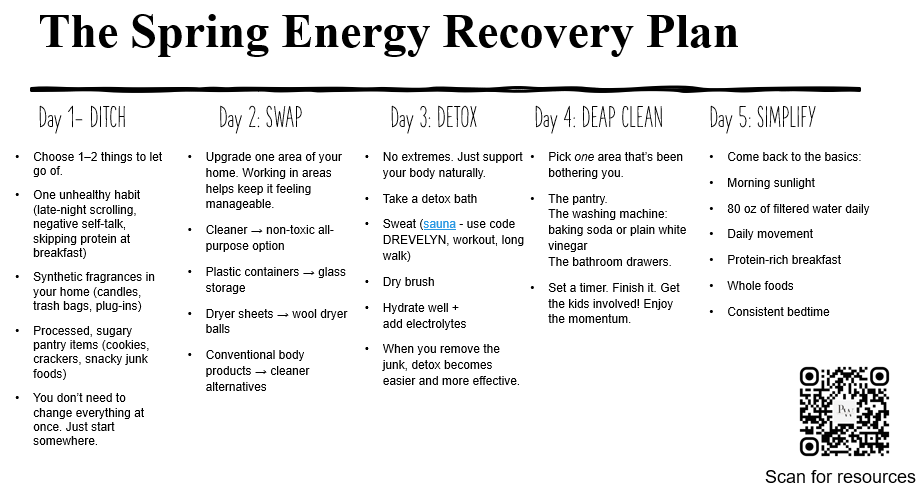
Day 5 Focus: Simplify
One of the most powerful strategies is simplifying daily habits so they are easier to maintain.
Foundational practices that support multiple systems simultaneously include:
morning light exposure
adequate hydration
daily movement
protein-rich meals
whole-food nutrition
consistent sleep timing
These habits support circadian rhythm, metabolic signaling, hormone communication, and nervous system recovery.
Before adding complexity, it is often helpful to strengthen these foundations.
A More Personalized Path Forward
Health does not require perfection.
It benefits from alignment.
When strategies match an individual’s physiology, progress often becomes more steady and predictable.
Some individuals benefit from foundational adjustments alone.
Others may find that additional insight helps clarify priorities and improve efficiency.
The goal is not to do everything.
The goal is to focus on what matters most first.
If you would like individualized guidance, Clarity Visits are available to help identify which factors may be most relevant for your health goals.
Ready to Personalize Your Health
Watch the Full Training
If you would like to learn more, you can watch the full Part 3 training here.


