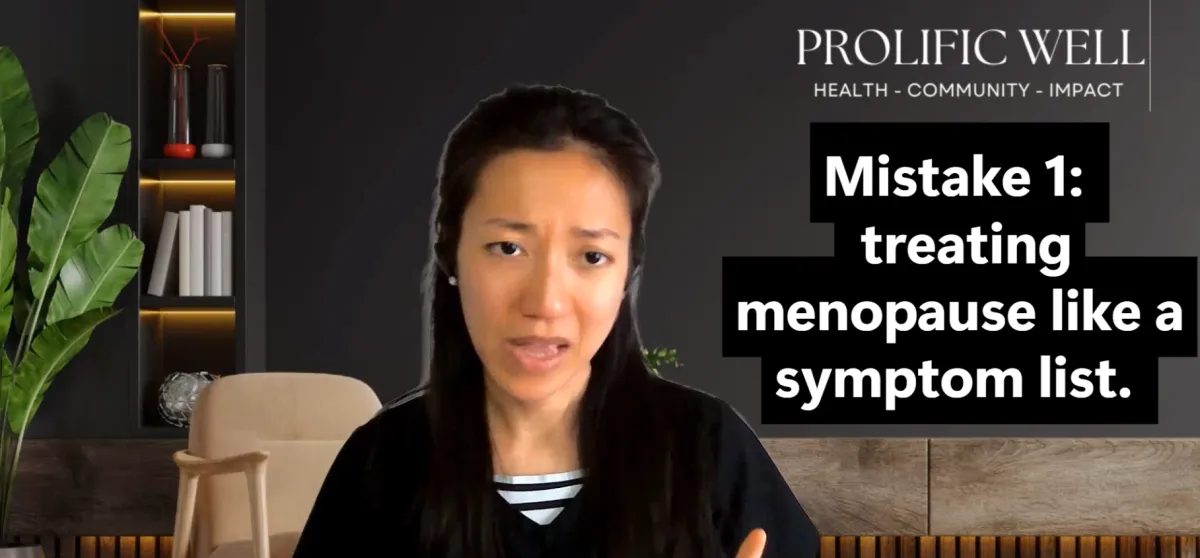
Midlife Hormones Are Changing — And What Women Need to Do Differently Now
For years, women have been told that exhaustion, weight gain, anxiety, poor sleep, brain fog, and mood changes are “just part of aging.”
That explanation has never felt satisfying — and now, science is finally catching up to what women have been experiencing all along.
Midlife hormone care is undergoing a quiet but meaningful shift. In research, in policy, and in public conversation, perimenopause and menopause are no longer being treated as fringe issues or minor inconveniences. They are increasingly recognized as systemic health transitions that affect the entire body and shape long-term health outcomes.
This matters — because how women navigate this transition influences not just how they feel today, but their risk for chronic disease, cognitive decline, metabolic dysfunction, and loss of vitality later in life.
Women Are Not Broken. The System Has Been Outdated.
One of the most important reframes women need right now is this:
You are not failing your body.
Your body is responding to change.
For decades, midlife women were treated as a clinical afterthought. Hormonal shifts were minimized, symptoms were normalized, and care models were built around short visits and surface-level solutions.
Today, research is confirming what many women already sensed:
Hormone changes affect the brain, heart, metabolism, bones, immune system, and nervous system
Symptoms often begin years before menopause, during perimenopause
“Normal” lab values do not always reflect optimal physiology
Ignoring early signals delays effective intervention
This isn’t about blame. It’s about updating the framework.
Why Hormone Conversations Are Shifting
A few important changes are driving this shift:
1. Hormone therapy fear narratives are being re-evaluated
Outdated, fear-based messaging around hormone therapy — largely rooted in older studies and older hormone formulations — is being reassessed. Regulatory changes and updated research emphasize nuance, timing, formulation, and individualized risk assessment.
This does not mean hormones are right for everyone.
It means blanket fear is no longer supported by evidence.
2. Perimenopause is finally being recognized as a critical window
Women in their late 30s and early 40s are reporting sleep disruption, anxiety, weight changes, cycle irregularity, and cognitive shifts — often years before menopause.
Perimenopause is not a moment.
It’s a transition window — and what happens during this window matters.
3. Women are demanding personalization, not trends
Across wellness culture and healthcare, women are increasingly frustrated with one-size-fits-all advice. Supplement stacks, hormone “balancing” hacks, and quick fixes are losing credibility.
Women want:
Clear explanations
Strategic lab work
Systems-based care
Long-term thinking
What Still Isn’t Working
Despite progress, several common problems remain.
Oversimplification
Menopause is often reduced to hot flashes and mood changes, while deeper systemic shifts — cardiovascular risk, metabolic changes, bone density loss, inflammation, and cognitive health — are under-addressed.
Binary thinking
Hormone therapy is often framed as either dangerous or a cure-all. Neither is true. Effective care requires discernment, not ideology.
Wellness noise
Hormones are not light switches. They respond to systems: blood sugar stability, sleep architecture, stress physiology, nervous system safety, and nourishment. You cannot out-supplement a dysregulated system.
A Higher Standard for Midlife Health
Here is the reframe women deserve:
Midlife is not a decline. It is a decision point.
Responsibility is not blame.
Taking your health seriously does not mean you failed before.
It means you are ready for clarity instead of guessing.
High-quality hormone care:
Takes time
Uses data strategically
Looks at systems, not symptoms alone
Requires partnership and participation
When women engage fully in this process, outcomes change dramatically — not just symptom relief, but energy, clarity, confidence, and long-term vitality.
What Actually Moves the Needle
While every woman is different, meaningful progress often starts with:
Stabilizing blood sugar
Supporting sleep and circadian rhythm
Regulating stress physiology
Using labs strategically, not reactively
Individualizing hormone and non-hormone approaches
Not all women need hormones. Some do.
The goal is not ideology — it’s alignment.
Where to Start
If you’re ready to stop normalizing symptoms and start building momentum, the most important step is not doing everything — it’s doing one thing well.
That’s why I created the 7-Day Health Jump Start.
It’s a focused reset designed to help your body:
Calm the stress response
Stabilize energy and blood sugar
Establish daily rhythms your hormones respond to
Feel what aligned health begins to feel like again
This isn’t a cleanse or a quick fix.
It’s a reset — so your body can remember how to respond.
Midlife is not the end of the story.
For many women, it’s the chapter where health finally becomes intentional.


