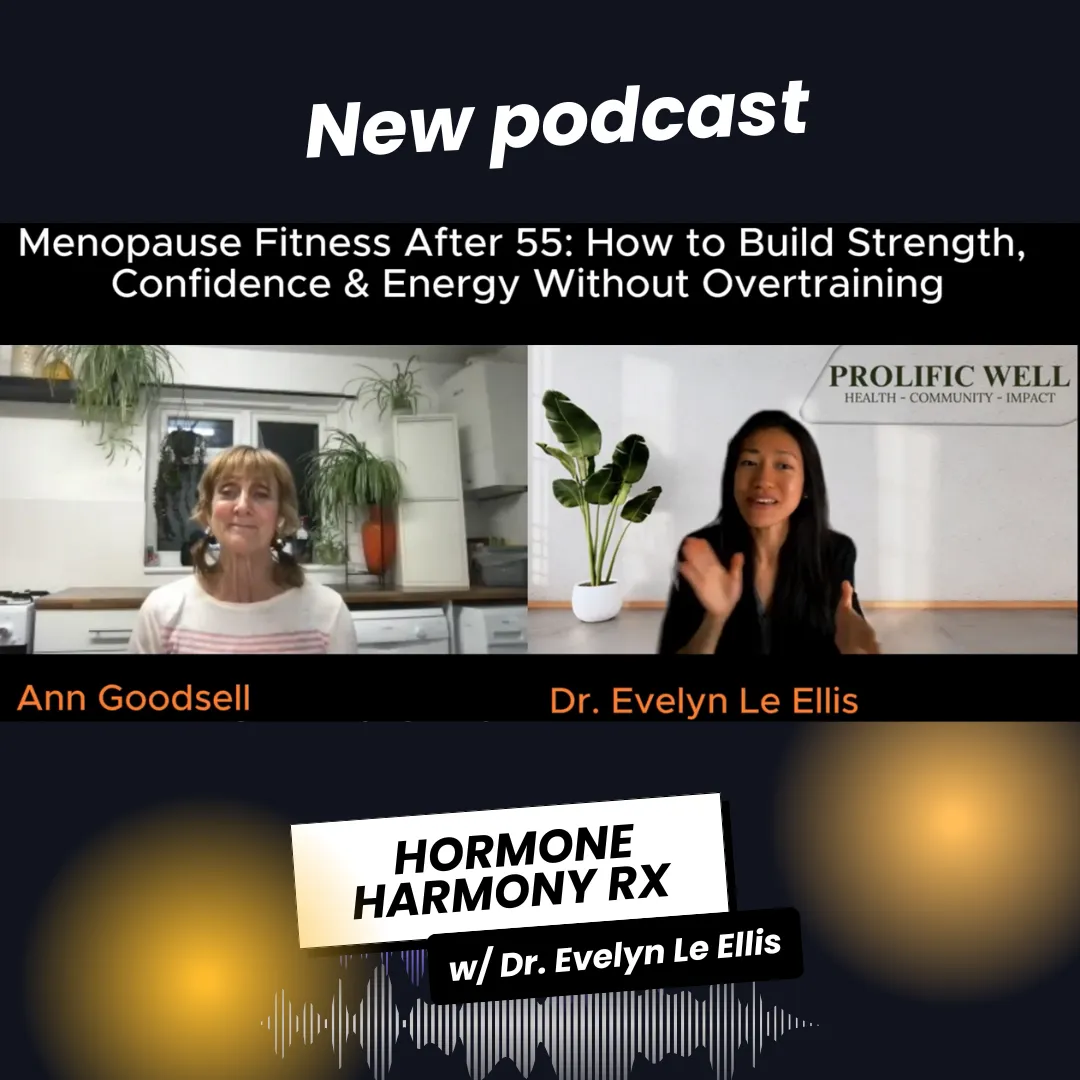
Menopause Isn’t the End of Strength — It’s the Redesign Most Women Were Never Taught
One day, the workouts that “always worked” just… stop working.
You’re doing the same routines.
Eating the same way.
Trying harder — if anything, pushing more.
Yet your body feels heavier.
Your joints ache.
Your energy crashes faster than it ever used to.
And quietly, a question creeps in that no one warned you about:
“Is this just what aging feels like?”
Here’s the truth most women are never told:
👉 Your body isn’t failing you.
👉 It’s asking you to evolve.
Menopause is not a breakdown.
It’s a redesign — of strength, identity, and how you care for yourself moving forward.
Why This Matters Right Now
Women today are living longer than ever.
By 2030, over 1.2 billion women worldwide will be in menopause or postmenopause.
And yet most fitness, health, and medical systems are still operating on pre-menopausal rules.
Here’s what that creates:
Women blaming themselves for weight gain
Chronic joint pain from overtraining
Exhaustion masked as “lack of discipline”
Loss of confidence in their bodies
Fear of starting (or restarting) exercise
In my clinical work and conversations with experts like Ann Goodsell, a menopause strength coach with nearly 40 years of experience, I see the same pattern repeatedly:
Highly capable women losing trust in their bodies — not because they’re weak, but because they were never taught how the rules change.
The Hidden Truth (Myth Bust): “Push Harder” Stops Working After Menopause
The fitness industry sells one dominant message:
“If results aren’t happening, you’re not doing enough.”
That advice might work in your 20s and 30s.
After menopause?
It backfires.
What actually changes:
Estrogen decline affects muscle recovery
Cortisol becomes easier to spike
Joint and connective tissue resilience shifts
Sleep disruption slows repair
Nervous system tolerance decreases
Translation:
More intensity ≠ more results.
In fact, for many women, harder training accelerates fatigue, injury, and burnout.
This is not weakness.
It’s physiology.
The Emotional Reality No One Talks About
Let’s be honest — this isn’t just about fitness.
It’s about identity.
Many women tell me:
“I don’t recognize my body anymore.”
“I used to be strong. Now I feel fragile.”
“I’m afraid of getting injured.”
“I don’t want to start over.”
One client described it perfectly:
“It feels like my body changed the rules without telling me.”
That moment — when confidence quietly erodes — is often more painful than the physical symptoms.
And that’s where the real work begins.
From Elite Athletes to Midlife Redesign
Ann Goodsell spent decades training elite performers — including Olympic gold medalists.
Then menopause hit.
Joint pain.
Weight gain.
Muscle loss.
Sleep deprivation.
The same methods she taught others stopped working for her own body.
Instead of forcing harder training, she asked a different question:
“What does strength look like now?”
That question changed everything.
She didn’t abandon fitness.
She rebuilt it intelligently — creating targeted, recovery-aware training designed specifically for the menopausal body.
And the outcome wasn’t just physical strength.
It was confidence.
Trust.
A sense of coming home to her body again.
What the Science and Experts Agree On
This isn’t opinion. It’s evidence.
Research consistently shows:
Resistance training is critical for postmenopausal bone density
Muscle mass is a primary predictor of longevity and independence
Overtraining elevates cortisol, worsening fat retention
Recovery capacity changes with hormonal shifts
Nervous system regulation matters as much as muscle load
Strength after menopause isn’t optional — it’s protective.
But it must be done differently.
7 Principles for Strength After Menopause
1. Train for capability, not appearance
Strength is about what your body can do, not how it looks.
2. Recovery is part of the workout
If you don’t recover, you don’t adapt.
3. Smaller, targeted sessions outperform random intensity
Precision beats volume.
4. Respect joint and connective tissue health
Longevity matters more than ego.
5. Nervous system safety comes first
A calm system builds strength faster.
6. Start where you are — without shame
Beginners’ mindset is wisdom, not failure.
7. Think decades, not weeks
Train for the woman you want to be at 70 and 80.
Here’s What Most People Miss…
Menopause isn’t just a hormonal transition.
It’s a leadership moment in your own life.
This phase asks:
Will you punish your body for changing?
Or will you partner with it differently?
Most women were never taught how to answer that question.
That’s where the right guidance changes everything.
Personalized, Hormone-Informed Strength & Longevity Care
At Prolific Well, we don’t treat menopause as a problem to “fix.”
We treat it as a pivot point.
Through:
Personalized hormone evaluation
Nervous system-aware care
Evidence-based longevity strategies
Thoughtful movement and recovery planning
Trusted collaborations with menopause-specific experts
We help women rebuild trust in their bodies — without fear, overtraining, or burnout.
This is not about doing more.
It’s about doing what actually works now.
Your Next Step
If you’re tired of blaming yourself…
If your body feels unfamiliar…
If you want strength, clarity, and confidence that lasts…
Book a personalized consultation with Prolific Well today.
Together, we’ll design a smarter path forward — one that respects your hormones, your history, and your future.
👉 Call our care team now to see how it works at 360-339-6169
👉 Book your personalized consultation and reclaim strength on your terms.
Future Pacing
Imagine waking up feeling steady in your body again.
Moving without fear.
Training with purpose — not punishment.
Menopause didn’t take your strength.
It’s inviting you to redefine it.
And when you do, this next chapter can be the strongest one yet.


